
Online learning has made yoga education much more accessible.
You can watch lectures from another country, study anatomy from home, revisit recorded material and learn from teachers you might never otherwise meet.
There is real value in that.
But Yoga Teacher Training also includes skills that are difficult to understand only by watching someone else do them.
Teaching involves people.
Different bodies, different questions, different reactions and situations you often cannot predict until they are happening in front of you.
Some things make more sense when you can try them
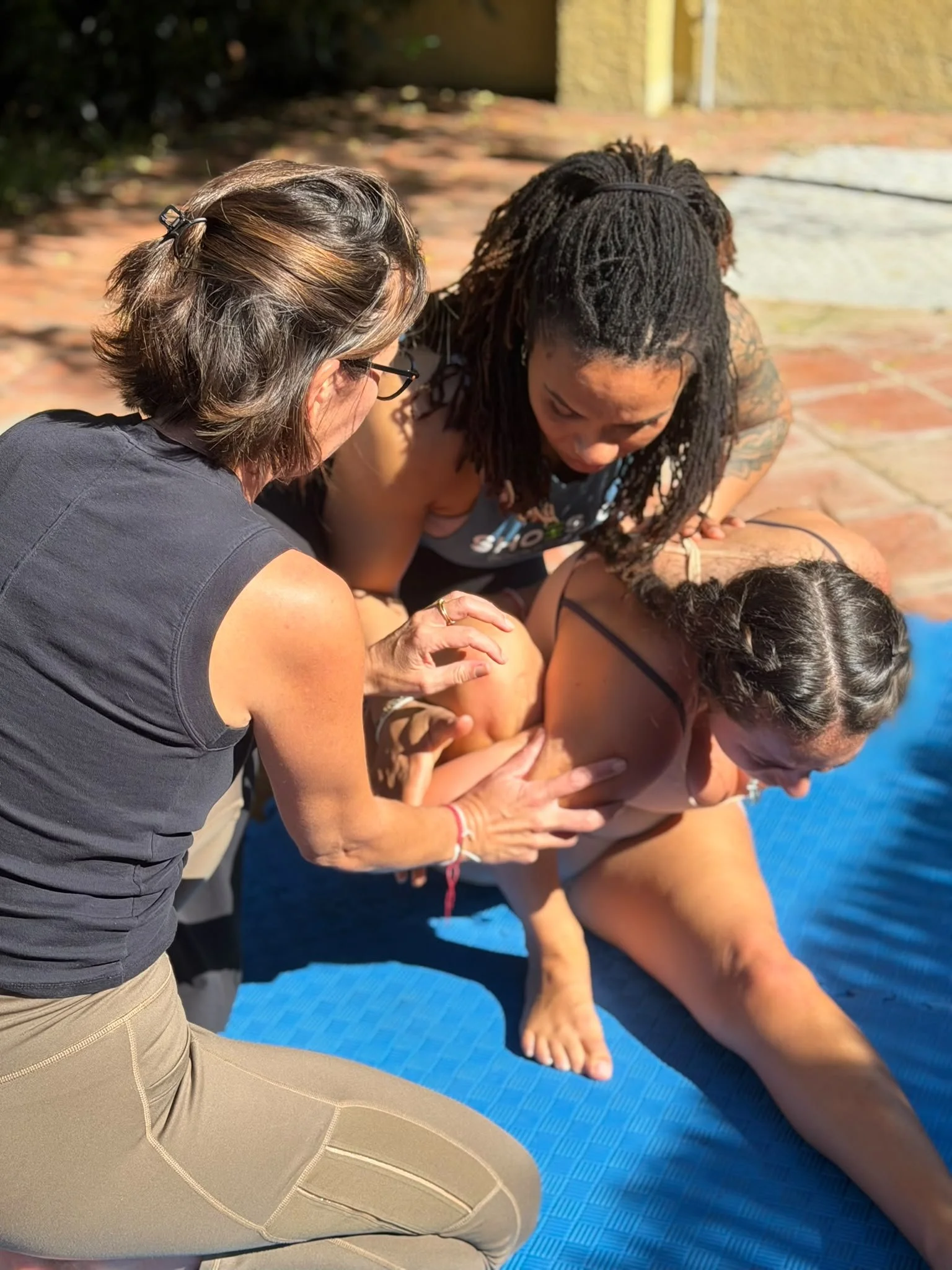
Think about hands-on adjustments.
You can watch a demonstration and understand where the teacher places their hands. But actually working with another person brings up completely different information.
How much pressure are you using? How does that person respond? Is the adjustment helping? Would a verbal cue have worked better?
The same happens with teaching methodology.
Leading a class in your head is very different from standing in front of a group, giving an instruction and realizing that half the room understood it differently from how you intended.
That moment is useful.
You adjust the language, try again and receive feedback while the experience is still fresh.
Research in other fields that involve practical and sensory skills has found similar differences. In one randomized study, face-to-face and blended learning produced better practical skill outcomes and higher confidence than fully online learning. Yoga teaching is its own discipline, but the principle is relevant: some skills need to be practiced, not simply explained.
Learning to observe people takes time
One of the most important skills a yoga teacher develops is observation.
Noticing when someone is uncomfortable. Seeing how two people approach the same posture differently. Knowing when to offer an alternative and when there is no reason to intervene.
You develop that eye by spending time around different bodies.
During an in-person training, you are constantly exposed to those differences. You practice with the same group, teach each other, discuss what you notice and see how your teachers respond to situations as they happen.
That kind of learning can be difficult to schedule into a prerecorded lesson.
There is also the time between classes
This is one reason we chose a residential format at Nydum.
Students stay at the same rural home where they practice and study. Classes, meals, breaks and study time happen in one place, with small groups living together throughout the course.
A question from anatomy class can continue over lunch. Someone can ask a teacher about something they noticed during morning practice. Students talk to each other about what felt difficult, what made sense and what they are still trying to understand.
None of that needs to be scheduled.
It simply becomes part of the training.
Online and in-person learning do different things well
We don't think every piece of yoga education needs to happen inside a classroom.
Online learning can be excellent for theory, revision and continuing to study after a course has finished.
But when the subject involves teaching, observing movement, working with different bodies, practicing adjustments and receiving immediate feedback, being physically present gives you information that a screen cannot always provide.
That is why Nydum's Yoga Teacher Trainings are taught in person and in small groups.
Our residential programs include 200 Hour, 300 Hour and 500 Hour Yoga Teacher Trainings, alongside specialist training in Yin Yoga and Prenatal Yoga. The focus changes from course to course, but practical learning remains part of the way we teach.
If you're considering a Yoga Teacher Training, look at more than the curriculum.
Ask how much you will actually practice teaching. How much feedback you'll receive. How many students will be in the room. And how much opportunity you'll have to work with real people while you're learning.
Those details can make a significant difference to the experience.